
The Patrol of al-Abwa (Waddan)
The Patrol of al-Abwa (Arabic: غزوة الأبواء), also referred to as the Patrol of Waddan (غزوة ودان), holds the distinction of being the first military campaign led personally by the Prophet Muhammad (peace be upon him). It marked a significant shift in the strategic posture of the nascent Muslim state in Medina, transitioning from passive defense to active patrolling of trade routes and alliance-building.
SEERAHPOLITICSMILITARYHISTORYTHE MILITARY HISTORY OF THE SEERAH
Abdur Sami
12/28/20252 min read
Chronology and Location
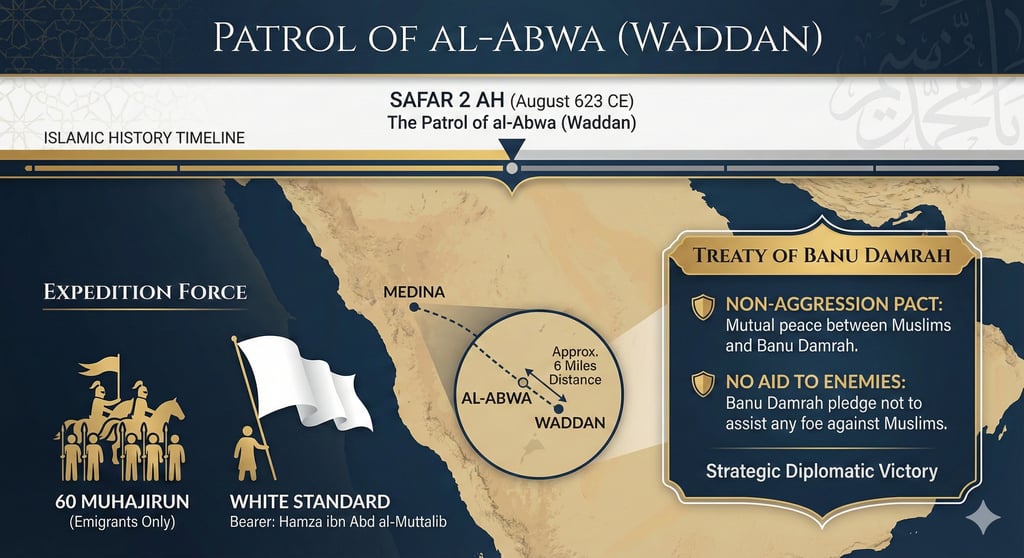
According to the primary sources, this expedition took place in the month of Safar in the second year of the Hijra (approximately August 623 C.E.).
Duration: The Prophet (peace be upon him) remained outside of Medina for fifteen nights.
Location: The destination was Waddan (ودان), a location approximately six miles from al-Abwa (الأبواء). Al-Abwa is significant as the burial place of the Prophet's mother, Aminah bint Wahb.
Operational Details
Leadership and Composition
Commander: The expedition was led by the Prophet Muhammad (peace be upon him) in person.
Force Strength: The force consisted of sixty horsemen (firis).
Demographics: The detachment was composed exclusively of the Muhajirun (Emigrants). No members of the Ansar (Helpers) participated in this patrol.
Deputy in Medina: Before departing, the Prophet (peace be upon him) appointed Sa'd ibn Ubadah (may Allah be pleased with him) as the interim governor of Medina to manage its affairs.
The Standard (Flag)
The standard carried during this expedition was white in color. The honor of carrying this flag was bestowed upon Hamza ibn Abd al-Muttalib (may Allah be pleased with him).
Objectives and Outcome
Strategic Objectives
The primary objective of the patrol was to intercept a trade caravan belonging to the Quraysh of Mecca. Additionally, the mission aimed to project power in the region and secure alliances with local tribes.
The Encounter
The Muslim force did not encounter the Quraysh caravan or engage in combat. Instead, they made contact with the Banu Damrah (بني ضمرة), a clan of the Kinanah tribe, who inhabited the area around Waddan.
The Treaty of Banu Damrah
The most significant result of this expedition was a diplomatic victory in the form of a non-aggression pact (Muwada'ah). The leader of Banu Damrah at the time was Majdi ibn Amr al-Damri.
Terms of the Treaty
The sources record the essence of the written agreement between the Prophet (peace be upon him) and the Banu Damrah:
Mutual Non-Aggression: The Banu Damrah would not attack the Muslims, and the Muslims would not attack them.
No Assistance to Enemies: The Banu Damrah pledged not to aid any enemy against the Muslims.
Support: They agreed not to assist anyone who harbored ill intentions towards the Muslims.
This treaty secured the Muslims' flank and began the process of isolating the Quraysh by neutralizing potential allies along their vital trade artery to Syria.
Conclusion
The Patrol of al-Abwa concluded without bloodshed but achieved substantial strategic success. It established the Prophet (peace be upon him) as a regional leader capable of projecting force and negotiating treaties. The expedition returned to Medina after successfully neutralizing the threat from the Banu Damrah and asserting control over the northern trade routes.
References:
Al-Waqidi, M. (n.d.). Kitab al-Maghazi [Uploaded File: مغازي الواقدي (1)].
Ibn Hisham, A. (n.d.). Al-Sirah al-Nabawiyyah (T. A. Saad, Ed.) [Uploaded File: سيرة ابن هشام ت طه عبد الرؤوف سعد (1)].
Ibn Sayyid al-Nas, M. (n.d.). Uyun al-Athar [Uploaded File: عيون الأثر (1)].
Al-Azimi, M. (n.d.). Al-Lu'lu' al-Maknun fi Sirat al-Nabi al-Ma'mun [Uploaded File: اللؤلؤ المكنون في سيرة النبي المأمون (2)].
Ibn Qayyim al-Jawziyya. (n.d.). Zad al-Ma'ad fi Hady Khayr al-Ibad [Uploaded File: زاد المعاد في هدي خير العباد - ط عطاءات العلم (3)].